MUNUccle 2026
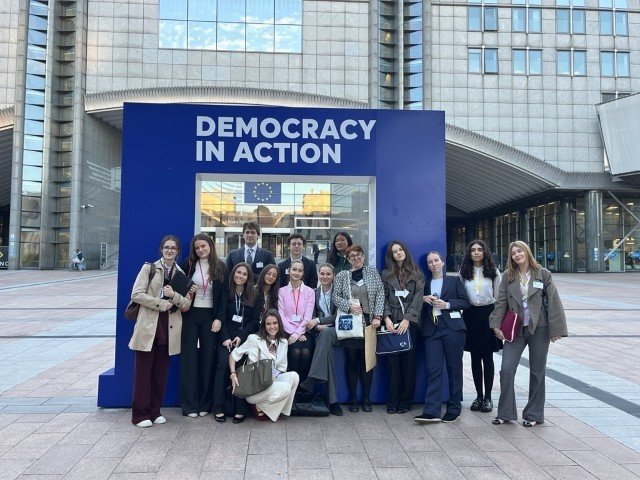
At the beginning of October a delegation of 14 delegates of EEB2 joined the Model United Nations organized by EEB1 for it’s 9th edition.
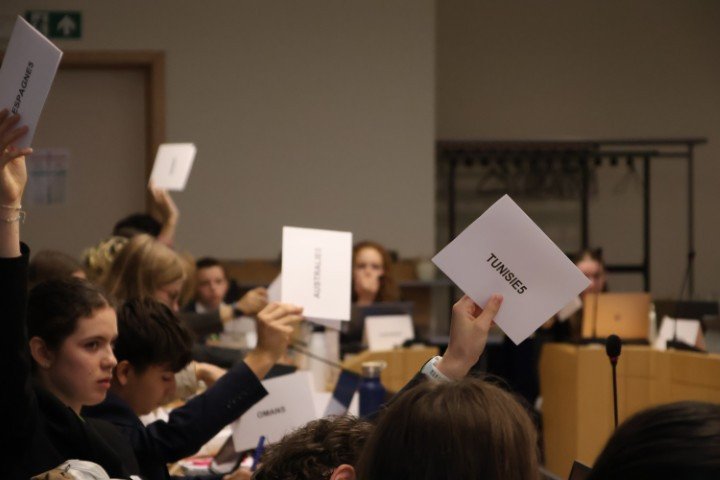
Our delegates, students of S6 and S7, spent 3 days at the European Parliament with other students from EEB’s and a dozen of French school from around the world.
The EEB2 MUN, BRUMUN, is starting to recruit their delegates for trainings organized during this school year and an actual session planned for October 2027.
In parallel, MEC, the Model European Council is recruiting their participant for the annual edition that will take in EEB4 in March.
Why so many “Model” sessions and is it worth missing a few days of school?
During a United Nations simulation, students play the role of country representative debating in different committees.
Such a simulation develops many skills in different learning categories.
The academic content is obvious, covering aspects of the curriculum of the Europeans schools in history, social sciences, geography but also a use of languages ability and debating.
The 8 Life Skills that are at the center of our pedagogical project - tolerance, self-control, critical mind or hope just to mention a few - are also covered by such a simulation.
Aside from these aspects, the values that are put in focus such as diplomacy, respect, search for compromise and solution-based discussions are extremely important ones that are not often touched on in such a practical way in an academic setting. The European values of peace and cohabitation are put into practice in a very realistic way. Learning while doing is the most crucial way to learn and such a simulation is an amazing opportunity.
In the era of Artificial Intelligence, pedagogical challenges are constantly evolving. Precious skills such as creativity, diplomacy and emotional intelligence are skills that our students are developing in such an event and that the AI does not cover.
These skills will be key for our student university path but are also recognized in their application. As pointed out by one of the French teacher participating to MUNUccle, their former students who were admitted at the prestigious Science Po in Paris were all former MUN participants.
A MUN is also focusing on collaborations between students from different age groups, different sections, different EEB’s and even, in the case of MUNUccle, from a completely different system.
Another important aspect is that, for MUNUccle and BRUMUN, while supervised by adults, the projects are completely student led. The group of student organizers is extremely invested and is developing very professional skills such as logistics, coordination but also mentoring and content preparation at a very high level. Aside from the country representative, some students are part of the admin team, a group of students helping the delegate to prepare their work or the press team that will work on covering the event.
BRUMUN participants will attend four Saturdays of training at school. These trainings, prepared by the student organizers with supervision of teachers give the opportunity to the participants to train in writing resolutions, debating and organizing in country groups but are also the opportunity to invite guests who have relevant experience in diplomacy or working within the UN system. Every guest, teacher or member of Management member who visited the Saturday trainings in the last years were impressed by how involved and motivated the students were, spending a total of four weekend days at school in a dynamic and positive atmosphere.
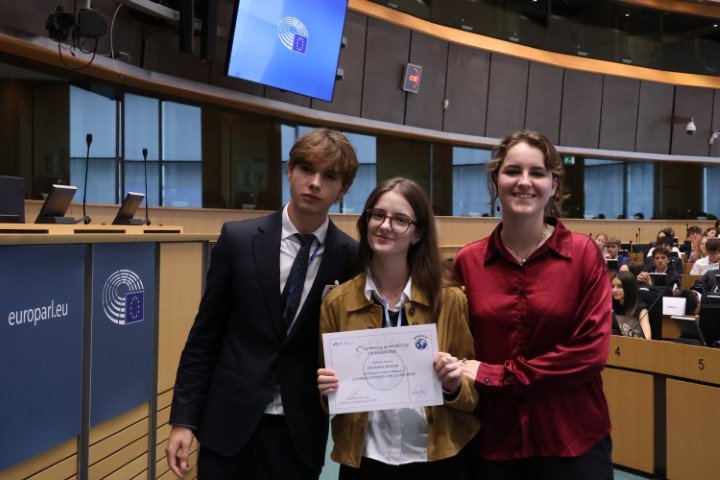
At this edition of MUNUccle, our S7 student Victoria Rädler won the Best Delegate prize in her committee (Security) a year after receiving an award at the last BRUMUN.
The debating and diplomacy skills she acquired during those MUN as well as her impressive personal qualities will certainly help her in the role of Head of COSUP this school year and in her future career path.
Congratulations to all the participants and a big thank you to the media Team members Greta Mastmeir and Felix Panaite for their thorough photo reportage.
Interested in joining BRUMN 2027? Contact Mrs Jeanjot caroline.jeanjot@eursc.eu